
Carpets take a daily beating. Foot traffic, spills, dust, allergens, and even sunlight slowly wear them down long before you notice visible damage. Most homeowners think professional carpet cleaning is enough. But what you do between cleanings decides how long carpets last. It also affects how clean your home feels.
After years working with residential and commercial properties, one pattern is clear. Homes that follow simple maintenance habits look better. They also save a lot on deep cleaning and replacement costs. The difference isn’t complicated. It comes down to consistent, smart care.
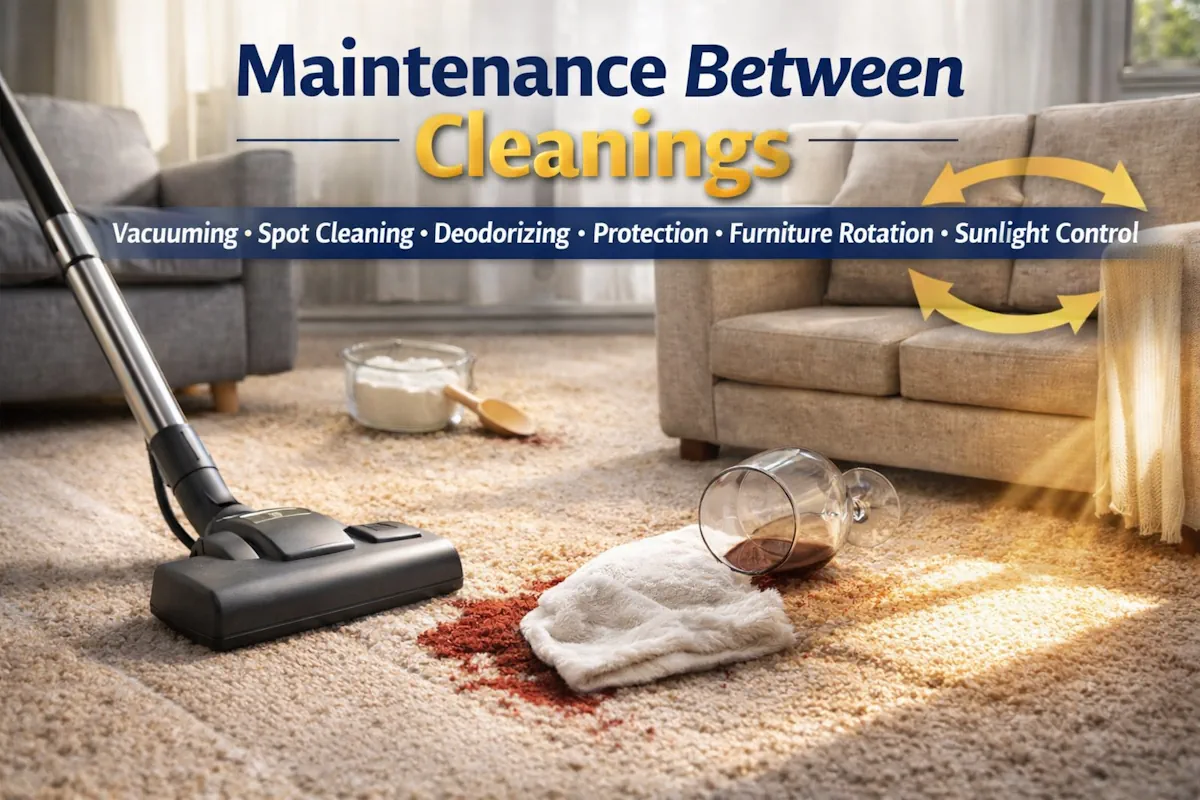
This guide explains how to care for carpets between professional cleans using proven methods. It covers regular vacuuming, spot cleaning, deodorising, protective treatments, furniture rotation, and sunlight control.
Why Carpet Maintenance Between Cleanings Matters
Professional carpet cleaning removes deep-seated dirt, bacteria, and allergens. But the moment the cleaning is done, your carpet starts collecting debris again.
Without proper maintenance:
- Dirt embeds into fibers and causes wear
- Stains become permanent
- Odors build up over time
- Carpet lifespan shortens dramatically
Consistent upkeep acts as a protective barrier. It reduces long-term damage, keeps your home healthier, and ensures your next professional clean is more effective.
Regular Vacuuming: The Foundation of Carpet Care
Vacuuming isn’t just about appearance—it’s the single most important habit for preserving carpet fibers.
How Often Should You Vacuum?
- High-traffic areas (hallways, living rooms): 3–4 times per week
- Moderate-use areas (bedrooms): 1–2 times per week
- Low-use areas: Once per week
If you have pets or children, increase frequency. Pet hair, dander, and tracked-in debris accelerate fiber breakdown.
What Most People Get Wrong
Many homeowners vacuum too quickly. Effective vacuuming requires:
- Slow passes (allow suction to lift embedded dirt)
- Overlapping strokes
- Multiple directions (to reach all sides of fibers)
A high-quality vacuum with strong suction and a HEPA filter makes a noticeable difference, especially for allergy control.
We are highly recommended on Google Business Profile
Serving: London & Surrounding Areas
⭐️⭐️⭐️⭐️⭐️
285+ 5 Star Google Reviews
Spot Cleaning: Preventing Permanent Stains
Spills are inevitable. Permanent stains are not—if you act fast.
The Golden Rule: Act Immediately
The longer a spill sits, the deeper it penetrates. This is especially true for:
- Coffee and tea
- Red wine
- Pet accidents
- Grease or oil-based stains
Proper Spot Cleaning Process
- Blot, don’t rub
Rubbing spreads the stain and damages fibers. - Use a suitable cleaning solution
Avoid harsh chemicals. Mild, carpet-safe solutions work best. - Work from outside inward
This prevents the stain from spreading. - Blot dry with a clean cloth
Excess moisture can lead to mold or odor issues.
Common Mistake to Avoid
Over-wetting the carpet. Too much liquid pushes the stain deeper and can damage the backing.
For stubborn or set-in stains, professional stain removal is often necessary to fully eliminate the issue without damaging the carpet .
Deodorizing: Keeping Carpets Smelling Fresh
Even if your carpet looks clean, odors can linger beneath the surface.
What Causes Carpet Odors?
- Pet dander and accidents
- Food spills
- Moisture buildup
- Bacteria trapped in fibers
Effective Deodorizing Methods
- Baking soda treatment: Sprinkle lightly, leave for 15–30 minutes, then vacuum
- Carpet-safe deodorizing powders: Designed for deeper odor neutralization
- Ventilation: Fresh air reduces moisture and odor buildup
Avoid heavily scented products. They often mask odors rather than eliminate them.
When Odors Persist
If smells return quickly after deodorizing, the issue is likely deeper—within the carpet padding. That’s when professional cleaning becomes essential.
Protective Sprays: Extending Carpet Life
Protective treatments are one of the most overlooked steps in carpet care.
After professional cleaning, applying a protective spray helps:
- Repel spills
- Prevent stains from bonding to fibers
- Reduce dirt adhesion
How Carpet Protectors Work
They create an invisible barrier around fibers, giving you more time to clean spills before they become permanent.
When to Apply
- Immediately after professional cleaning
- After deep DIY cleaning
- In high-traffic or high-risk areas
Homes with pets, children, or frequent guests benefit the most from this extra layer of protection.
Furniture Rotation: Preventing Wear Patterns
One of the biggest causes of uneven carpet wear is static furniture placement.
The Problem
Heavy furniture compresses carpet fibers over time, leading to:
- Visible indentations
- Uneven fading
- Permanent wear patterns
The Simple Fix
Rotate furniture every 3–6 months:
- Shift sofas slightly
- Move coffee tables
- Reposition rugs
This redistributes pressure and allows fibers to recover.
Extra Tip
Use furniture coasters or pads under heavy items. They reduce pressure and protect both carpet and furniture.
Sunlight Control: Preventing Fading and Fiber Damage
Sunlight might brighten your room, but it slowly damages your carpet.
What UV Exposure Does
- Fades colors unevenly
- Weakens fibers
- Causes discoloration patches
Over time, this damage becomes irreversible.
How to Protect Your Carpet
- Use curtains or blinds during peak sunlight hours
- Install UV-filtering window films
- Rearrange furniture or rugs to distribute exposure
Even rotating rugs or furniture helps balance fading and keeps your flooring looking uniform.
Combining These Habits for Maximum Impact
Individually, each maintenance step helps. Combined, they dramatically extend your carpet’s life.
Here’s what a practical routine looks like:
Weekly:
- Vacuum high-traffic areas multiple times
- Address spills immediately
Monthly:
- Deodorize carpets
- Inspect for stains or wear
Quarterly:
- Rotate furniture
- Reassess high-traffic zones
Annually (or as needed):
- Schedule professional deep cleaning
This layered approach keeps your carpet consistently clean instead of waiting until it looks worn out.
Real-World Insight: What Makes the Biggest Difference
From hands-on experience across residential and commercial properties, one truth stands out:
Homes that vacuum frequently and treat spills immediately rarely need aggressive restoration cleaning.
On the other hand, carpets that are neglected between cleans often:
- Require intensive stain treatment
- Show premature wear
- Need replacement years earlier than expected
Maintenance isn’t extra work—it’s cost prevention.
When to Call in Professional Cleaning
Even with perfect maintenance, carpets still need periodic deep cleaning.
You should consider professional service when:
- Stains won’t lift with spot cleaning
- Odors persist despite deodorizing
- Carpet looks dull or matted
- Allergy symptoms increase indoors
Professional methods like hot water extraction remove deep contaminants that regular maintenance can’t reach.
Conclusion: Small Habits, Big Results
Carpet maintenance between cleanings isn’t complicated—but ignoring it is expensive.
Regular vacuuming removes damaging debris. Quick spot cleaning prevents permanent stains. Deodorizing keeps your home fresh. Protective sprays add a safety layer. Furniture rotation prevents uneven wear. Sunlight control protects color and fiber integrity.
Together, these habits transform how your carpet looks, feels, and lasts.
If you want carpets that stay cleaner for longer, smell fresher, and look good for years, the plan is simple. Use consistent, proactive care, not reactive cleaning.
FAQ: Carpet Maintenance Between Cleanings
How often should carpets be professionally cleaned?
Can vacuuming really extend carpet life?
What’s the best way to remove fresh stains?
Are carpet deodorizers safe?
Do carpet protectors actually work?
How do I prevent furniture marks on carpet?
Can sunlight permanently damage carpets?
Is DIY cleaning enough without professional help?
Consistent maintenance is what separates carpets that look worn in a few years from those that stay fresh and durable long-term. The difference isn’t luck—it’s routine.